
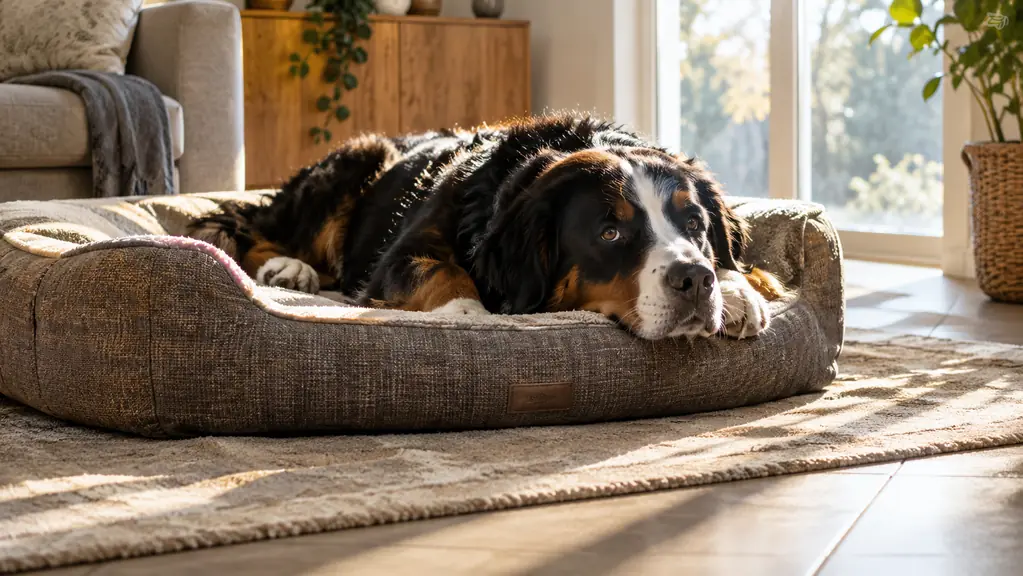
The first time I watched Biscuit try to stand up, I told myself he was just stiff from a nap. He was nine, a 62-pound yellow Labrador mix, and he had spent the morning doing what he always did, which was following me from room to room. But by that afternoon he was lying on the cool tile of the kitchen, and when he tried to get up, his back legs slid out from under him like they had forgotten how to work. I called our vet, and after the X-rays we had a name for it: hip dysplasia.
Our vet was blunt with me. He said the X-rays showed shallow hip sockets and that Biscuit would have good days and bad days for the rest of his life. Then he recommended Nutramax Laboratories Cosequin chewable tablets, the joint supplement he gave his own dogs. That was about two years ago. Biscuit has taken one tablet every morning since. I am not a vet, and I am not here to tell you that a supplement fixes everything. But I can tell you exactly what it did and did not do for him, and that is what this guide is about.
The chewable tablet that has been in Biscuit's bowl for two years
Nutramax Laboratories Cosequin is the #1 vet recommended retail joint health supplement brand, and it is the one our vet suggested when Biscuit's X-rays came back. One chewable tablet a day, and we noticed the difference over weeks, not days.
Amazon Check Today's Price on Amazon →Here is the honest version of what we did, in the order we did it. None of this is medical advice. It is one household's experience, and your dog deserves a plan made with your own vet.
I want to be honest about what did not work, because you will read a lot of claims online. The cheap pillow bed did not help. Skipping walks made things worse. Waiting to see if he would just get better wasted a month. The things that helped were the ones we could do consistently, every day, whether he seemed good or bad.
Step 1: Get a diagnosis before you buy anything
Everything changed once we had the X-rays. Before that I was guessing: maybe he pulled a muscle, maybe he was getting old, maybe the tile was too slippery. Guessing meant I tried the wrong things first. I bought a cheap pillow bed that went flat in a month. I moved his food bowl. I even cut back his walks, which was exactly the wrong move, because keeping him still made his legs stiffer, not better.
Our vet explained that hip dysplasia is a structural problem, not an injury. The ball of the hip joint does not sit deep enough in the socket, so the joint wears unevenly and the surrounding muscles work harder than they should. That matched what I was seeing. Biscuit's trouble was worst first thing in the morning and after long walks, and it was always his back legs.
So step one is not a product. It is an appointment. If your dog is struggling to stand, limping after normal activity, or hesitating before jumps they used to make without thinking, ask your vet about X-rays. You need to know what you are actually treating. And if your vet recommends a joint supplement, ask them which one they give their own animals. That is how we ended up with Cosequin.
Step 2: Give the supplement time to build up
Cosequin is not a pain pill. It does not work in twenty minutes, and it will not make a bad day disappear by dinnertime. The active ingredients are glucosamine hydrochloride, sodium chondroitin sulfate, and MSM, and they work by supporting the joint over time, not by masking the ache. Our vet told us to think of it as maintenance, the same way you would not expect one good night of sleep to fix a month of bad ones.
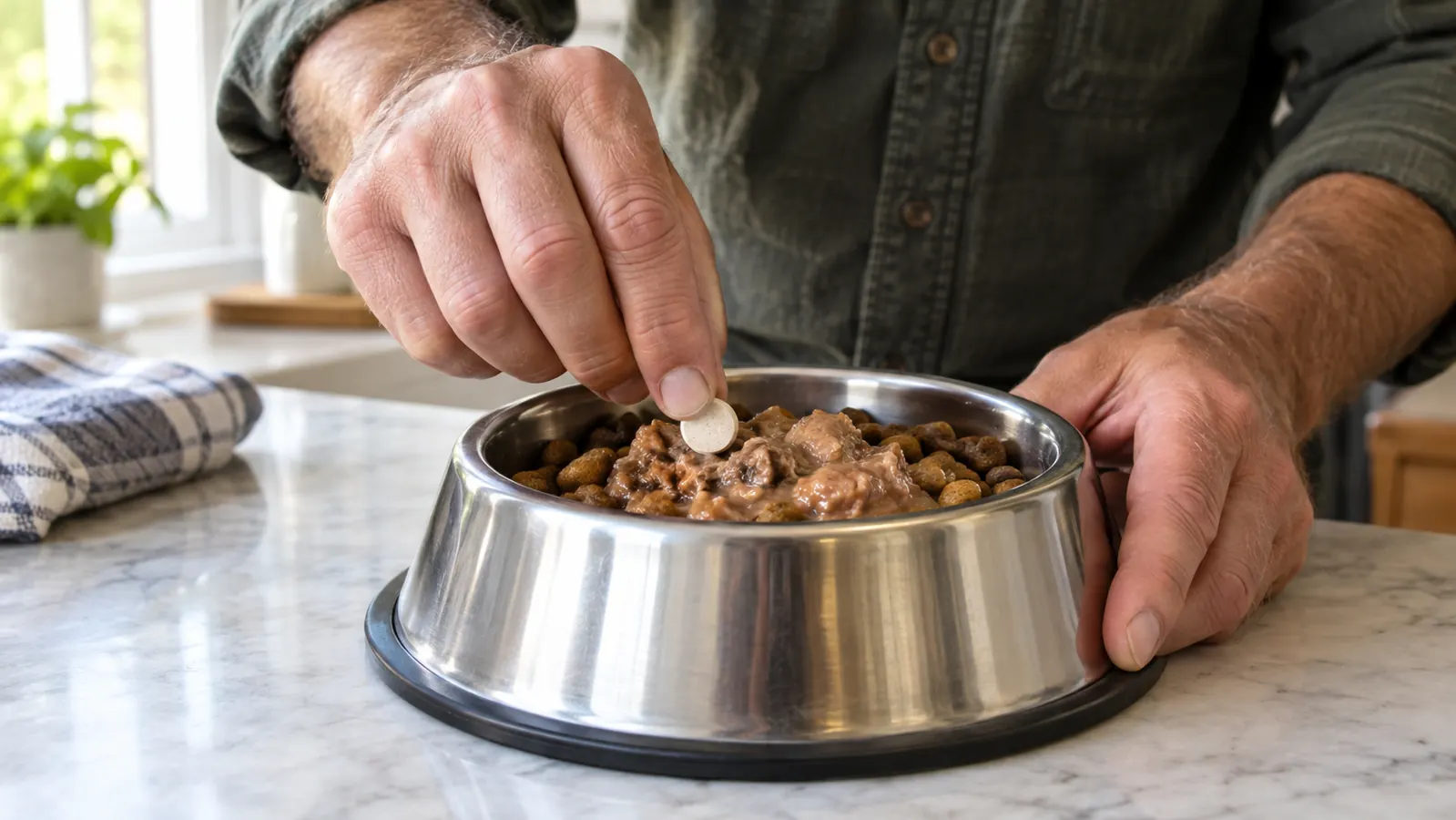
We started Biscuit on one chewable tablet every morning, tucked into his breakfast. He is a Lab, so he would eat a tablet off the floor if I let him, but I found it went down easiest when I pressed it into a spoonful of wet food. The first week I saw nothing. The second week I saw nothing. Somewhere around week three I realized he was getting up from his bed on the first try more often than not.
Two years in, I can tell you the honest version: he still has bad mornings. He is eleven now, and some days his back legs are stubborn no matter what. But the bad mornings are fewer, and the good days are better. The tablet is not a cure. It is the single most consistent thing we do for him, and consistency is the part most people skip. One reason we have stuck with the chewable tablet form is how easy it is to give. Biscuit does not fight it, and that matters when you are doing this every single day for years.
Step 3: Make the floors and furniture work with him, not against him
We live in a single-story house in Mesa, Arizona, with tile floors in every room. Tile is beautiful and it is also the worst possible surface for a dog with weak back legs. When Biscuit tried to get up fast, his feet would skid and he would end up in a split that scared both of us. The first real improvement came from the floor, not the medicine cabinet.
We put down a long runner in the hallway and a big rug in the living room, and I moved his Bedsure orthopedic dog bed into the bedroom about eighteen months ago. It replaced a flat, cheap pillow bed that had gone pancake-flat, and the difference was immediate. He sinks into it instead of lying on top of it, and he can brace against the raised edges when he gets up. I sewed a spare cover for it, so there is always a clean one while the other is in the wash. We keep it in the bedroom, where he sleeps, because a dog with stiff hips will not walk across the house to find comfort.
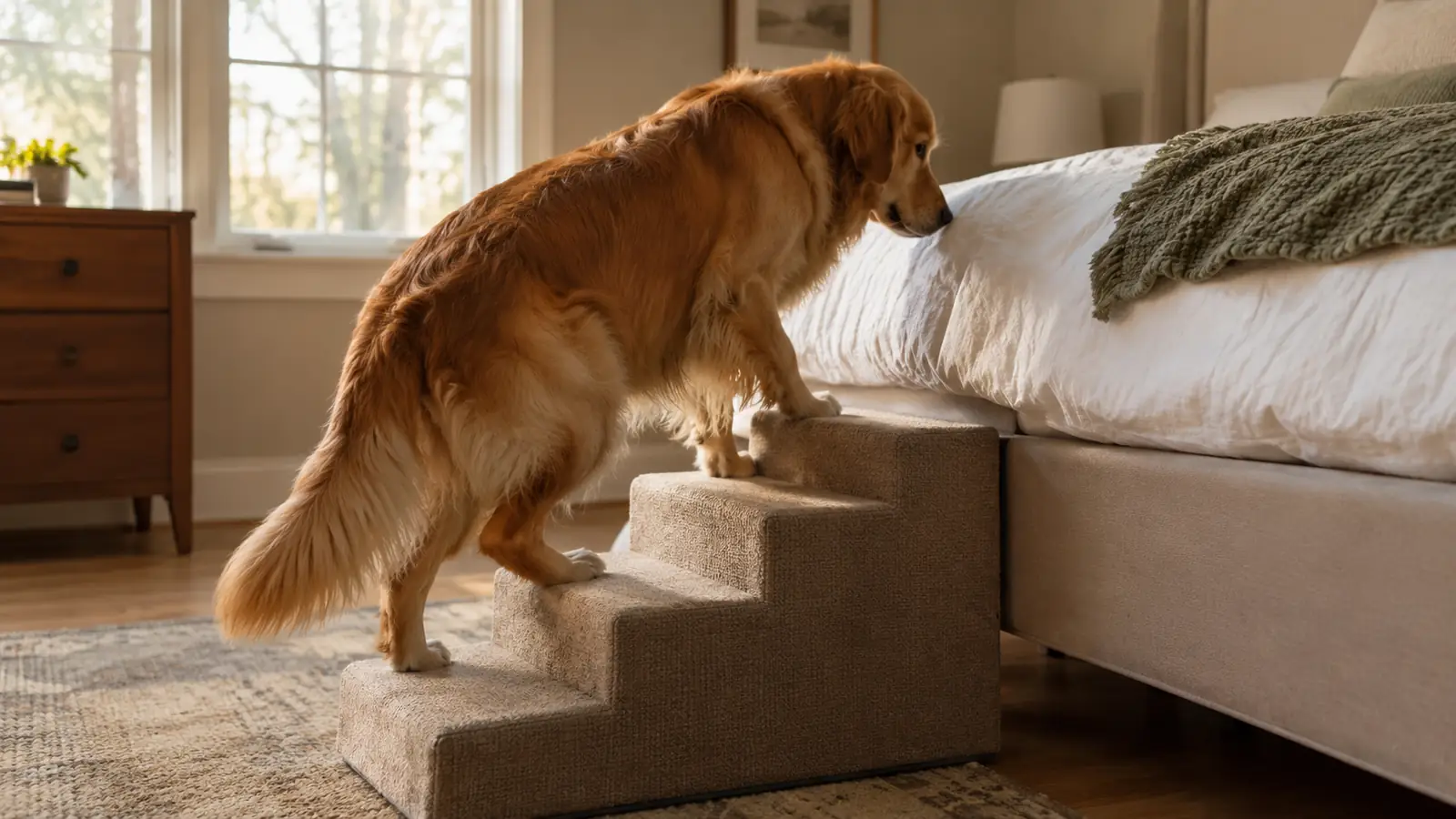
The other thing that changed everything was a set of EHEYCIGA 18-inch 4-step dog stairs beside my bed, which we bought about a year ago after Biscuit misjudged a jump up and yelped. He had always jumped onto the bed, and hip dysplasia took that away from him slowly enough that I did not notice until he missed. Now he walks up the stairs like he has been doing it his whole life, and Pepper the cat uses them too. If your dog has a favorite high spot, stairs or a ramp will do more for their day than almost anything else.
Step 4: Change the walk, not the dog
The hardest lesson for me was that Biscuit's walks had to change even though he still wanted the old ones. He is a yellow Lab mix, which means he would happily walk until his legs gave out, because the walk itself is the whole point to him. Left to his own judgment, he would overdo it every single time. So I became the grown-up in the room.
Now we take two shorter walks instead of one long one. We go out in the morning after he has had time to warm up, and again in the late afternoon when the Arizona heat has backed off. I watch his pace. If he starts to slow down on the way home, we turn around sooner the next day. The rule I use is simple: a tired dog is fine, but a dog who cannot get up off the floor afterward is a dog I walked too far.
I also stopped letting him launch himself off the porch. I pick up the pace at the top of the stairs so he does not have to think about the drop, and I keep him on a loose leash so he can choose his own footing. These sound like small things. They are small things. But small things are what a bad hip is made of, and small things are what help. I learned to tell the difference between a tired dog and a hurting dog, too. When he stands with his weight shifted or holds a back leg up, we skip the second walk and give him a quiet day.
Step 5: Keep notes and check in with the vet
About six months in, I started keeping a little notebook. I am a retired school office manager, so keeping records is what I do. I wrote down the date, the weather, how far we walked, and whether Biscuit got up on the first try the next morning. It sounds excessive, I know. But it caught things I would have missed, like how much worse he was after a cold snap, and how much better he was on days when he had a short walk the evening before.
That notebook is also why I know the tablet deserves the credit it gets. The pattern was not random. The good stretches lined up with the weeks we never missed a dose, and the rough stretches lined up with the week I ran out and waited three days to reorder. I am not telling you that to sell you anything. I am telling you because consistency is the part that actually matters, and you cannot be consistent if you are always running out.
Finally, go back to the vet. We do a check-in about twice a year. Nutramax Laboratories has been making pet supplements for over 25 years, and Cosequin is the #1 vet recommended retail joint health supplement brand, but the right dose and the right plan for your dog is still a conversation for your vet, not a blog. Biscuit's plan has changed as he has aged, and yours should too.
None of this happened overnight, and none of it happened because of one thing. The tablet, the bed, the stairs, the shorter walks, and the notebook all worked together. If I had to pick the single most important piece, it would be showing up every day and paying attention.
What Else Helps
Beyond the tablet, the bed, and the stairs, the things that helped Biscuit most were boring. A consistent schedule. Shorter walks. A rug where there used to be tile. A spare cover on his bed so it never went a day without being washed. I sewed that cover myself, which is the kind of thing I do, and it sounds like nothing until you realize a clean, flat, supportive surface is half the battle for a dog who has to brace to stand up.
If you have a cat with the same kind of trouble, Nutramax makes a sprinkle capsule that Pepper has had on her wet food for about eighteen months. She stopped jumping onto the bed before we started it, and now she makes it onto the couch most afternoons. I am not a vet, so I will not tell you what to feed your animal. I will only tell you what our household has done, and what we have seen.
What I would tell a friend in the same spot is to start small. You do not need every product at once. We added the rug, then the bed, then the stairs, one thing at a time, so we could see what actually helped. If I had bought everything in the first week, I would not know which piece mattered.
Two years in, Biscuit still has bad mornings. But he gets up on the first try almost every day now, and that was not true before we started.
If your vet says joint support is worth trying, this is the one we use
Nutramax Laboratories Cosequin chewable tablets are the ones our vet recommended and the ones Biscuit has taken every morning for two years. Talk to your vet first, then check today's price on Amazon.
Amazon Check Today's Price on Amazon →