

The morning routine at our house goes like this: Biscuit, our 11-year-old, 62-pound yellow Lab mix, stands at the kitchen counter with his tail going while I pull one chewable tablet out of the Nutramax Laboratories bottle. He takes it like a treat, no fuss, no hiding it in peanut butter. Then he walks, stiffly but steadily, to his water bowl. Two years ago, that walk looked different. It looked like a dog who had given up on his back legs.
I am not a vet, and I want to be clear about that up front. I am a retired school office manager in Mesa, Arizona, who has nursed two aging animals through stiff joints, and I have kept careful notes the whole way. This is what months of daily use of Nutramax Laboratories Cosequin chewable tablets actually looked like for my dog.
The Quick Verdict
Cosequin genuinely helped our senior dog move more easily, but it is a daily habit, not a fix, and it took about six weeks before I saw a real difference.
Amazon Check Today's Price →If your dog is slowing down, this is the supplement I reach for every single morning
Nutramax Laboratories Cosequin is the #1 vet recommended retail joint health supplement brand, and after two years of daily use with Biscuit, I understand why. It is easy to give, the chewable tablets are accepted like a treat, and it supports joint health without turning breakfast into a battle.
Amazon Check Today's Price on Amazon →How I've Used It
Biscuit was nine when our vet confirmed hip dysplasia on X-rays. It was a Tuesday in March, and we had brought him in because he had started limping at the end of our usual walk around the block. I remember the exact moment: the vet pulled the film up on the screen and traced the hip joint with the end of a pen, saying his hip joint didn't seat properly and the wear was already showing. He was 62 pounds that day, and the vet said keeping him at that weight was one of the best things we could do for the hip, because every extra pound is extra load on an already worn joint. He was stiff first thing in the morning, worse after long walks, and he had started hesitating at the bottom of the two steps up to the porch. Our vet suggested Cosequin, and specifically the chewable tablets, because Biscuit is picky about anything that smells medicinal.
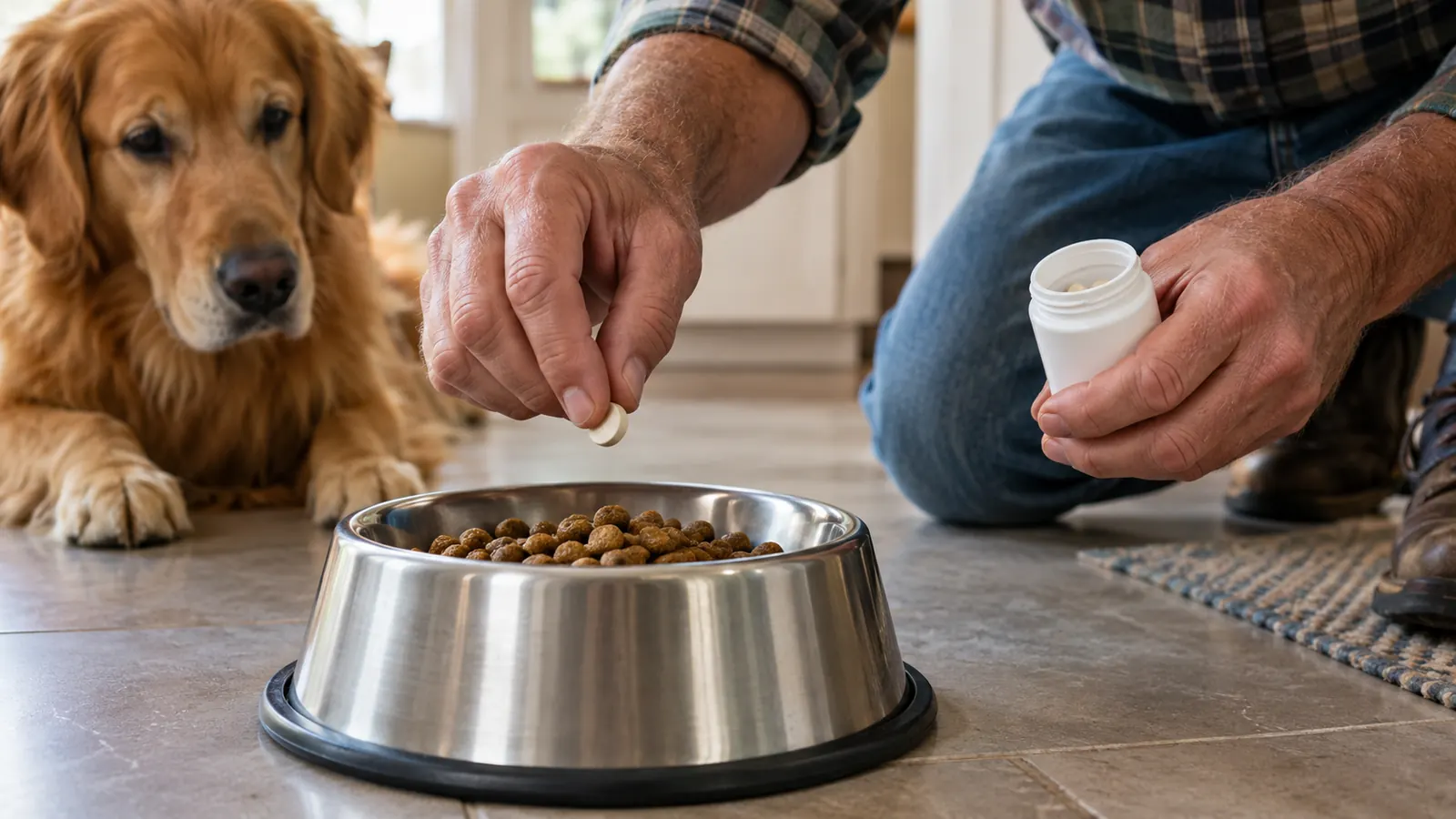
We started with one tablet a day, every day, at breakfast. The first morning, I tried hiding the tablet in a spoonful of canned food. He ate the food and left the tablet sitting in the bowl. The second morning, I offered it to him like a treat, and he took it straight from my hand. That was the end of the problem. The bottle says it is formulated for average, large, and small dogs, and our vet confirmed the amount that was right for a 62-pound dog like Biscuit. I give it to him at the same time every morning so I never forget. The tablets have glucosamine hydrochloride and sodium chondroitin sulfate, plus methylsulfonylmethane, which is the MSM you see on the label. I am not going to pretend I understood the chemistry when we started. I understood that our vet recommended it and that it was easy to stay consistent with.
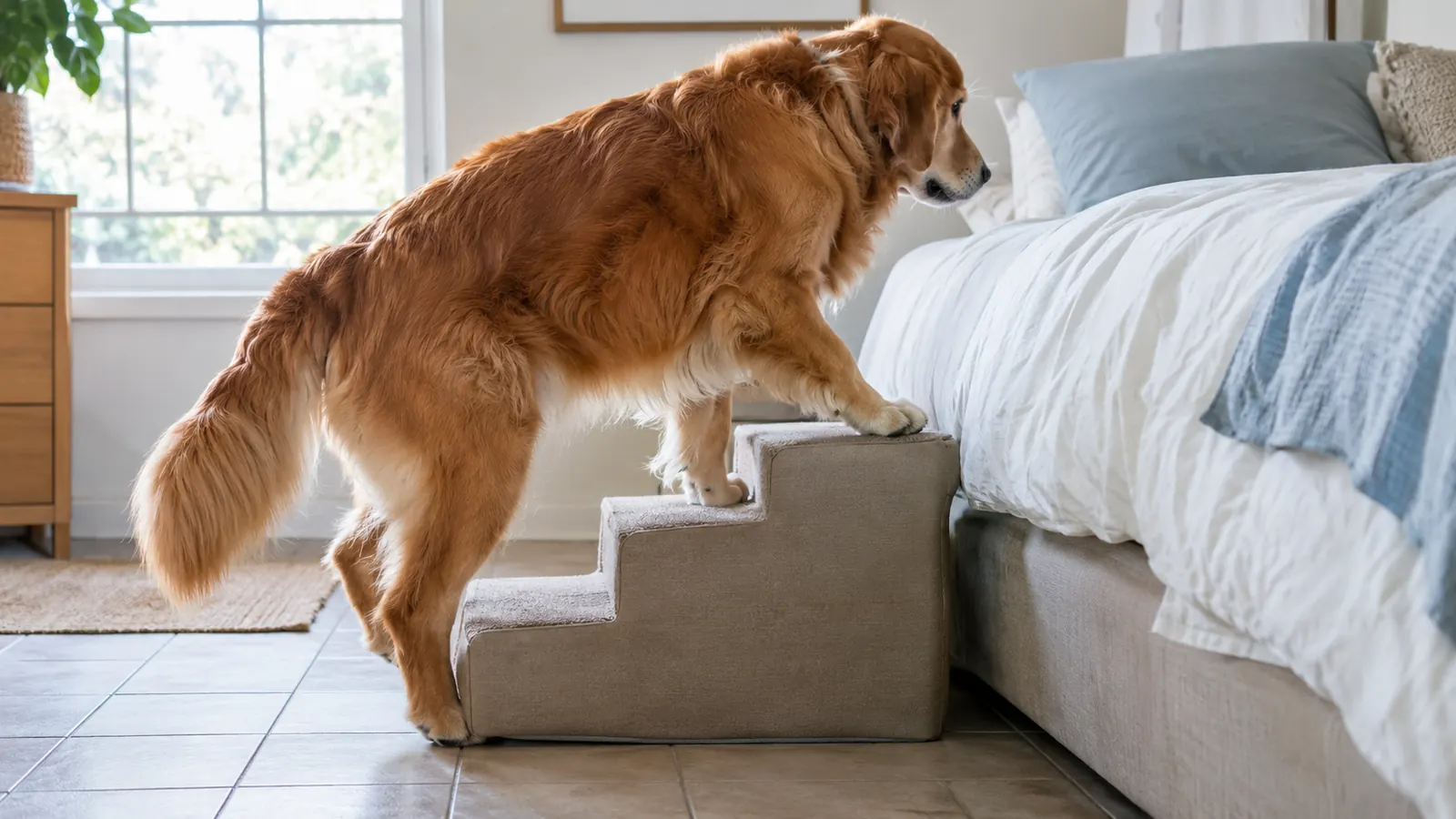
Consistency is the whole game with a supplement like this. It is not a pill you give for a week and then judge. We are two years in now, and the difference I see is the difference between where Biscuit was at nine and where he is at eleven. I keep a small spiral notebook in the kitchen drawer and jot down how he is moving each morning. It sounds like overkill, but after two years it is a record I can actually look back on, and it is how I know the good days outnumber the bad ones. He is not a young dog. He still has bad mornings, especially after a long walk the day before. But he gets up from his bed on his own, he uses the stairs beside my bed instead of yelping when he misjudges a jump, and he still wants to go on his walks. That last part matters more to me than anything.
What the Ingredients Actually Do
The active ingredients in Cosequin are glucosamine hydrochloride, sodium chondroitin sulfate, and methylsulfonylmethane, or MSM. Glucosamine is a building block of cartilage, chondroitin is part of the cushioning between joints, and MSM is a sulfur compound often included for joint comfort. I had to look all of this up when we started, because I am the kind of person who reads the label on everything. The label lists the glucosamine as FCHG49 and the chondroitin as TRH122, which are the specific forms the company uses. I will not pretend those codes meant much to me at first, but seeing them printed there told me the company was being specific about what is actually in the tablet, and I liked that. I also checked the allergen information, which lists almonds as free, and since nobody in our house has a food allergy, that was one less thing to worry about.
What I can tell you from watching Biscuit is that the combination worked better than I expected. Week two, nothing. Week four, I thought maybe his step was a little springier, but I could not be sure. I kept giving the tablet because our vet said to give it six to eight weeks before judging. Somewhere around week six, I noticed Biscuit stopped doing that little hesitation before stepping down off the curb. I remember the morning because I was watching him through the kitchen window on his way out to the grass. By month three, he was trotting to meet me at the door again, something he had stopped doing entirely the year before.
I want to be careful here, because I do not want to overstate it. Cosequin did not turn an 11-year-old dog with hip dysplasia into a puppy. He still has stiff back legs in the morning. He still needs the stairs. But the daily stiffness is softer, and the good days are more frequent. Our house has tile floors throughout, which are hard on old joints, and I have noticed he is more careful on them in the morning but moves across them fine by mid-afternoon. I also noticed he started asking to go outside more often in the afternoons, which he had stopped doing the year before. It is a small thing, but a dog who wants to go out is a dog who feels okay. For a dog whose X-rays showed real joint wear, that is a meaningful outcome. It is the difference between a dog who greets you at the door and a dog who waits for you to come to him.
Somewhere around week six, I noticed Biscuit stopped doing that little hesitation before stepping down off the curb.
How It Compares to the Other Things We Tried
Before we landed on Cosequin, we tried a few other things, and I think the honesty about that is useful. A friend recommended a fish-oil supplement, and we gave that a fair shot, about three months of a pump bottle over his breakfast. He did not mind the taste, and his coat did get glossier, which was a nice side effect. But I did not see the same change in how Biscuit moved, and the bottle was a mess to store in the Arizona summer heat. Another friend swore by a different glucosamine brand from the grocery store. Those tablets were big and oval and smelled like a vitamin, and Biscuit would take one into his mouth, chew once, and spit it out on the tile floor. I tried crushing one into his food and he ate around the crumbs. The chewable tablet form of Cosequin is genuinely part of why we have stayed consistent for two years. If I have to fight with a dog every morning to take his supplement, it is not going to happen every morning.
I also want to mention the things that are not the supplement. We added a set of low steps beside my bed about a year ago, after Biscuit misjudged a jump up and yelped. They are the 18-inch, four-step kind, and Pepper, our 14-year-old cat, uses them too, which tells me they are the right height for old legs as well as young ones. We replaced his flat, pancake pillow bed with an orthopedic bed in the large size. I sewed a spare cover for it out of the same fabric so one is always clean while the other is in the wash. Those changes mattered too. Cosequin is part of a whole picture, not the whole picture. If your dog is sleeping on a flat bed and jumping on and off furniture, no supplement is going to outwork that.
The Practical Side: Giving It Every Day
The 132-count bottle lasts us a little over four months at one tablet a day, which means I order it about three times a year. Each tablet is about an inch across, and the full bottle weighs roughly 12 ounces, so it is easy to keep in a cabinet without taking over the shelf. The tablets are small, and Biscuit chews them like a treat. That is the single biggest practical advantage, and I do not think it gets enough attention. A supplement only works if the dog actually takes it, and a chewable tablet that tastes good enough to be mistaken for a treat is one you will actually give.
A few practical notes from two years of daily use. I keep the bottle in the kitchen cabinet next to the dog bowls, not in the bathroom, because out of sight is out of mind. I give it at breakfast, always after he has eaten a little something, because giving it on a completely empty stomach seemed to bother him in the first week. In that first week he was queasy once, and I am still not sure the tablet was the cause, but I moved it to after breakfast and the problem never came back. When we visit my sister in Tucson for the weekend, the bottle comes with us. It is small enough to toss in a tote bag, and keeping the routine going on the road means we do not come home to a setback. I also set a phone reminder for the first of the month to check how much is left, so I never run out and miss days. Missed days are not a disaster, but consistency is the point.
I will also say this: the routine has become part of the day the way morning coffee is. Biscuit hears the cabinet open and comes trotting, and I honestly think he would take the tablet even if it did nothing, because it means breakfast is happening. There is something to be said for a supplement that does not add stress to the day.
What I Liked
- Chewable tablet that Biscuit takes like a treat, no hiding or fighting
- Our vet recommended it, and the brand is the #1 vet recommended retail joint health supplement brand
- Visible improvement in how Biscuit moved after about six weeks of daily use
- One tablet a day is simple to stay consistent with, even for a forgetful person like me
- The 132-count bottle lasts us over four months, so I only reorder a few times a year
Where It Falls Short
- It took about six weeks before I saw a real difference, so it is not a quick fix
- It is a daily habit, and consistency is what makes it work; missing weeks means starting over
- It did not eliminate Biscuit's morning stiffness or his need for stairs, and I would not expect it to
- The right amount depends on your dog's size, so you have to read the label and talk to your vet rather than just guessing
Who This Is For
Cosequin is for the owner of a dog who is slowing down and who wants to do something concrete about it. It is for the dog who hesitates at the bottom of the steps, who is stiff first thing in the morning, who still wants to go for walks but moves like the joints are complaining. If your vet has confirmed joint wear or hip dysplasia, and you want a daily supplement that is easy to give and backed by a brand vets actually recommend, this is a very reasonable place to start.
It is also for people like me who need the routine to be simple. If you are the kind of person who will give a supplement every single day for two months before judging it, Cosequin will work with you. The chewable form makes it easy, and the brand name means you are not guessing about quality. Nutramax Laboratories has been a leader in pet health for over 25 years, and that track record mattered to me when I was choosing what to put in my dog's mouth every morning.
Who Should Skip It
Skip Cosequin if you are looking for a cure. It is a joint health supplement, not a repair kit, and no supplement is going to undo hip dysplasia or years of wear. If your dog is in visible pain, or struggling to stand, or refusing to walk, do not start with a supplement. Talk to your vet about pain management and real treatment options first. I say this as someone who loves her dog and wanted desperately for a tablet to fix him. It did not fix him. It helped him move more comfortably, and that is a different and more honest thing.
Skip it also if you cannot commit to daily use. A supplement you give twice a week is a supplement you are wasting money on. And if your dog will not eat a chewable tablet, you will have to work around that, which means the convenience advantage disappears. For us, the daily habit was easy. If it is not easy in your house, have that conversation with your vet before you spend the money.
Two years in, this is still the first thing I reach for at breakfast
Nutramax Laboratories Cosequin chewable tablets are easy to give, easy to stay consistent with, and backed by a brand that has been a leader in pet health for over 25 years. If your senior dog is slowing down, this is a sensible, honest place to start. Talk to your vet, then check today's price on Amazon.
Amazon Check Today's Price on Amazon →