
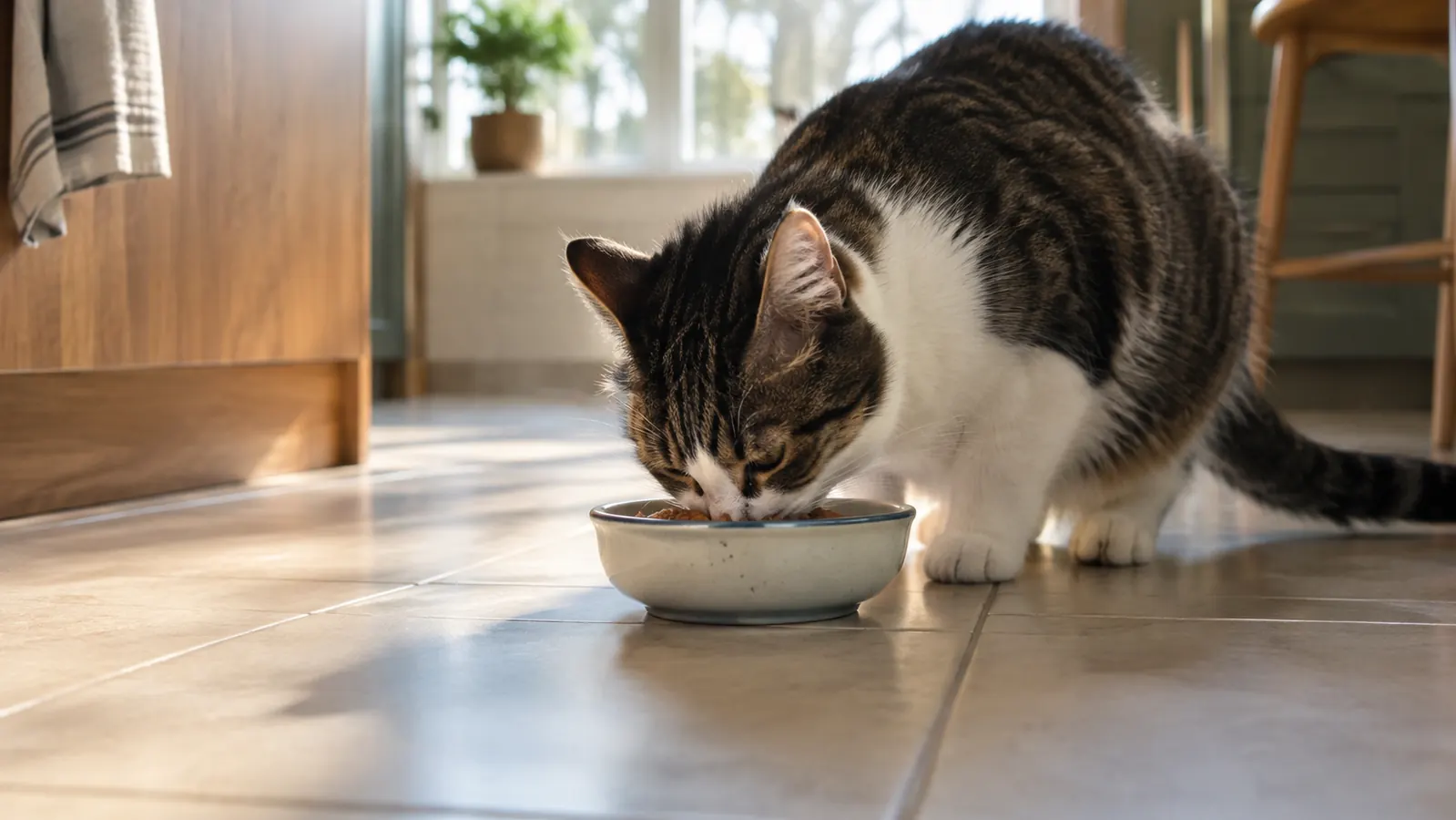
Pepper is a 14-year-old gray shorthair who used to jump from the floor to the top of the couch without thinking about it. Then she stopped. She would sit on the arm of the couch, look at the cushion, and step down instead of up. She stopped jumping onto the bed too. Our vet said arthritis in her back and hips, and suggested we think about a joint supplement. That is how we ended up with Cosequin Animal Care, the sprinkle capsule version made for cats.
The trouble was that Pepper is picky. She has turned her nose up at more treats than I can count, and she will walk away from a bowl if something smells wrong. So the idea of giving her a pill every day felt like a losing battle. I had visions of holding her still, prying her mouth open, and hoping she swallowed before she spit it out. That is not a routine I wanted for either of us.
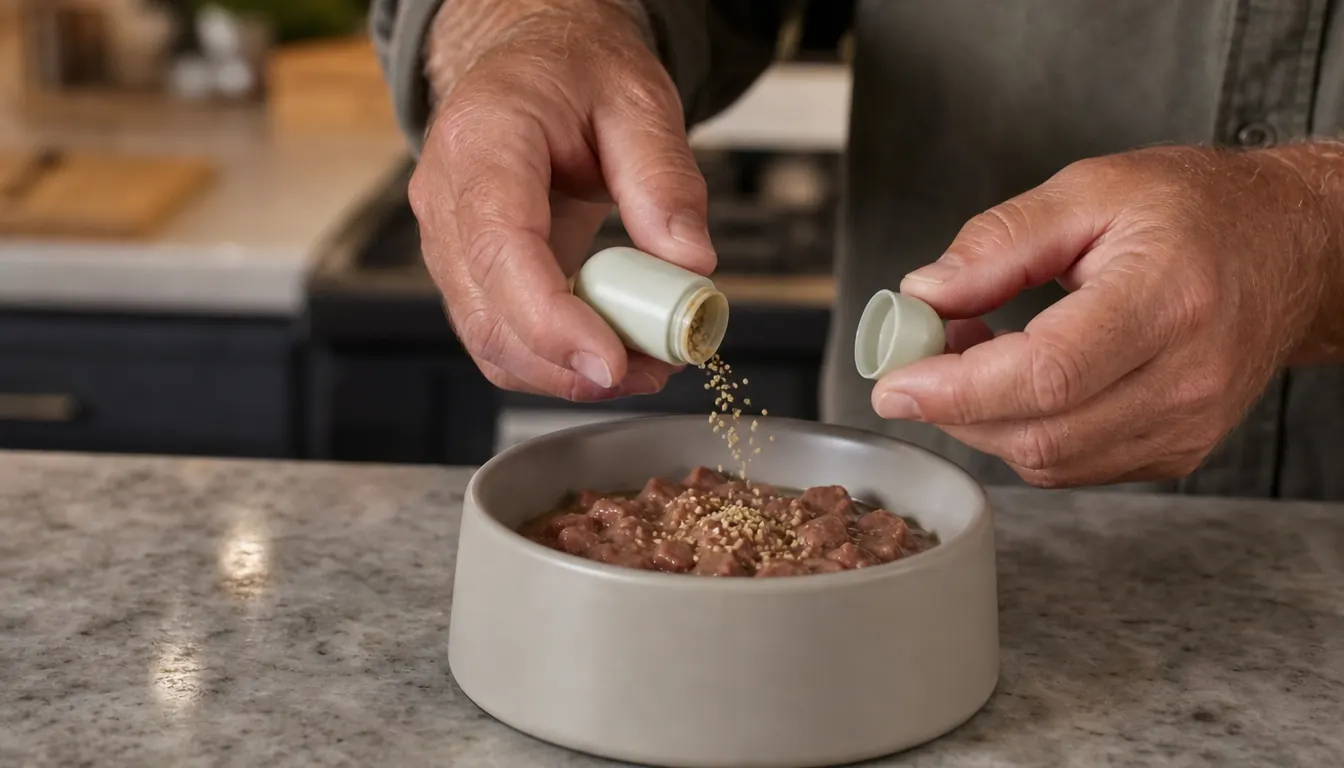
The sprinkle capsules changed that. You open the capsule, tap the contents over a small amount of wet food, and stir. She eats the food and never seems to notice the supplement is there. Eighteen months later, that is still the routine. I am not a vet, and this is not medical advice. It is just what worked in our house, and I hope it gives you a place to start.
A joint supplement you can actually hide in a picky cat's food
Cosequin Animal Care makes this as an easy sprinkle capsule in an 80-count package. Open, mix, serve. That is the whole routine, and it takes about a minute.
Amazon Check Today's Price on Amazon →Step 1: Talk to your vet before you start
I am not a vet, and I do not play one in this article. Before we gave Pepper anything, we asked our vet about her arthritis and whether a supplement made sense. She is 14, she has arthritis in her back and hips, and she had stopped jumping onto the bed and the couch. Our vet agreed that a joint supplement was worth trying and told us what to watch for.
This matters because every cat is different. A supplement that helps one cat may not help another, and some cats have health conditions that change what is safe. That is especially true if your cat has a condition like kidney disease or diabetes, because supplements can interact with those. Your vet knows your cat's history. Start there.
When we talked to our vet, we came with a simple description of what Pepper was doing. She was eating normally, grooming normally, and using the litter box normally. The only change was that she stopped jumping. That kind of detail helps a vet give useful advice. You do not need a dramatic story. You just need to describe what you are seeing at home.
Step 2: Pick a format a picky cat will actually eat
Cosequin Animal Care makes this for cats as an easy sprinkle capsule, and that is the only reason it worked here. The package is an 80-count box of small capsules. Each capsule is labeled as chicken flavored, which matters because Pepper is suspicious of anything that does not smell like food. The active ingredients are glucosamine hydrochloride 125 mg and sodium chondroitin sulfate 100 mg per capsule, with manganese listed on the label.
I like the sprinkle format because I do not have to fight Pepper to swallow a pill. I do not have to crush a tablet and hope she eats it. I open the capsule, tap the contents into her food, and stir. The capsule itself is small, and the whole thing takes less than a minute.
I have a dog too, and his joint supplement comes as a chewable tablet. That works for him because he will eat anything. Pepper is not like that. She needed a format that disappeared into food.
If your cat eats wet food, this is the easiest road. If your cat is a dry-food-only cat, talk to your vet about whether the sprinkle can be mixed into a small amount of wet food or a broth your cat already likes. The goal is to make sure the whole serving gets eaten, not just part of it.
The chicken flavor matters more than I expected. Pepper is a cat who sniffs everything before she eats it. When the contents of the capsule disappear into a spoonful of wet food, she does not pause. She just eats. If your cat is even pickier than mine, you may need to start with a smaller amount of food and build up over a few days.
Step 3: Use a small amount of food, not the whole bowl
The biggest mistake I almost made was sprinkling the supplement over Pepper's entire meal. If she did not finish the bowl, she would not get the whole serving. So I started with a spoonful of wet food, maybe a tablespoon, mixed the capsule contents into that, and gave it to her first. Once she finished it, I filled the rest of her bowl.
This does two things. It makes sure she eats the whole supplement, and it keeps her from noticing a change in the food she has eaten for years. Cats are creatures of habit. A sudden change in the smell or texture of a full bowl can make them suspicious. A small first bite hides the change much better.
I also learned to stir well. The contents of the capsule are fine, and they disappear into wet food quickly. If you leave a clump on top, a picky cat may eat around it. Give it a good stir and let it sit for a few seconds before you serve it.
If your cat walks away from the little bowl, do not chase her with it. Put it down, walk away, and give her a few minutes. Most cats will come back to a small bowl of wet food once the room is quiet. If she still refuses, you can try a different spoonful at the next meal. The routine builds over time, not in one day.
Step 4: Build the same routine every day
Pepper gets her supplement with her morning meal, every day, in the same bowl, in the same spot on the kitchen floor. The routine matters as much as the supplement. Once she learned that the little bowl appeared every morning, she started waiting for it. She does not inspect it the way she did in the first week.
We have been doing this for about eighteen months. It took maybe a week for Pepper to stop treating the little bowl like a new thing. Now she eats it first, then moves on to the rest of her breakfast. I do not have to chase her, hold her, or hide the capsule in anything tricky.
Pick a time you can stick with. Morning worked for us because I am always in the kitchen anyway. If you travel, take the capsules with you or ask someone who feeds the cat to follow the same routine. Consistency helps you notice changes too, because you know exactly what the cat ate and when.
I keep the capsule box in the kitchen cabinet where I make Pepper's breakfast. That way I do not have to remember a separate step. The box is small, the capsules are easy to open, and the whole routine happens in the same place every morning. Fewer steps means fewer days when you forget.
Step 5: Watch for changes and keep your vet in the loop
A joint supplement is not a cure, and I do not want anyone to expect that. The word I use with friends is support. We started Pepper on Cosequin Animal Care because her joints were stiff, and we kept going because she seems more comfortable. She still does not jump onto the bed the way she did at five, but she is moving around more easily than she was at thirteen.
What I watch for is small stuff. Is she jumping onto the couch again? Is she grooming her back? Is she using the stairs instead of sitting at the bottom and crying? Those are the things our vet told us to notice. I keep it simple: if something seems better, I mention it at her checkup. If something seems worse, I call sooner.
Cosequin Animal Care is the number one veterinarian recommended retail joint health supplement brand, and Nutramax has been making pet health products for over 25 years. That matters to me because I am giving it to a 14-year-old cat. But the label is not a substitute for your vet. If you are not sure whether a joint supplement is right for your cat, ask before you start.
I also keep a loose note in my head about how Pepper is doing. I do not write it down every day, but I notice if she stops using the stairs or starts hesitating before the couch. Those little changes are the reason we went to the vet in the first place, and they are the same things I watch now.
A Few Things That Did Not Work for Us
Before we settled on the sprinkle capsules, I tried a couple of other ideas. I tried mixing the supplement into a treat that Pepper had to chew. She chewed the treat, left the supplement behind, and looked at me like I had broken the rules. I also tried putting it in her water bowl. She drank less water that day, and I decided that was not a path I wanted to keep going down.
Those failures taught me something. Pepper will eat almost anything if it is in a small, familiar bowl of wet food. She will not eat something that changes the texture of her favorite treat or makes her water taste different. Every cat is different, but the small-bowl trick is the one that worked here.
If you try something and it does not work, that is useful information, not a failure. You are learning how your cat eats, and that knowledge makes the next attempt easier.
What Else Helps
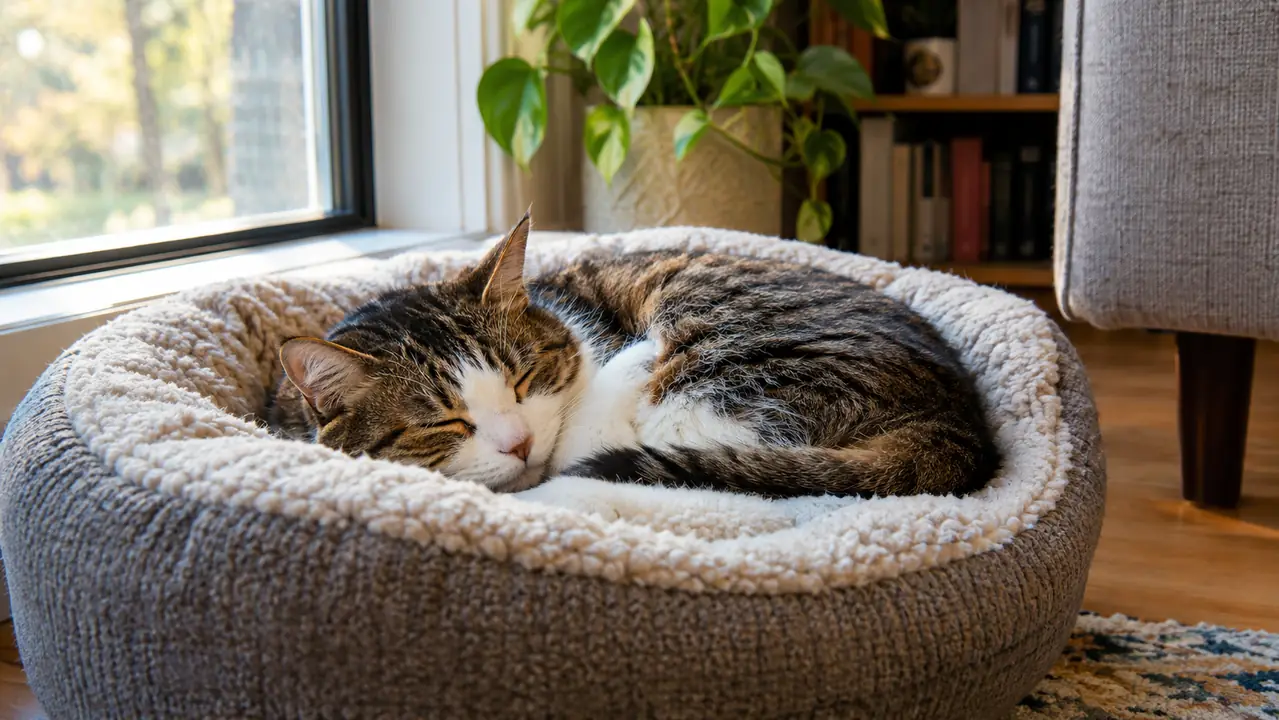
The supplement is only part of what we do for Pepper. She has a self-warming cat bed pad on the couch near the living room window, and she naps there most afternoons. We also have a set of low pet stairs beside our bed, and Pepper uses them to get up and down instead of making a jump she is not sure about. Keeping her warm and giving her easy paths onto the furniture seems to help as much as the supplement.
Our dog Biscuit has his own joint supplement, and watching him use the stairs reminds me that mobility help comes in different forms. For Pepper, the supplement and the warm pad and the stairs all work together.
Weight matters too. A lean cat has less weight on sore joints, so we are careful about treats. We also keep her environment calm and predictable. No loud surprises, no sudden changes in the furniture layout. Cats with stiff joints do better when they know where the safe landing spots are.
I sewed a cover for one of our pet beds a while back, and I learned that the surface a cat sleeps on makes a difference. Pepper prefers the pad with a little loft to it. She sinks into it instead of lying on a flat, hard cushion. You do not need to sew anything. Just pay attention to where your cat chooses to nap and make sure that spot is soft, warm, and easy to reach.
None of this is medical advice. It is what works in our house. Your cat may need something different, and your vet is the one who can help you sort that out. I am just a pet owner who has spent the last eighteen months learning how to make a supplement routine stick.
What If She Still Refuses?
If your cat turns her nose up at the first few attempts, do not give up after one day. The first time I made Pepper a little bowl, she sniffed it and walked away. I left it on the floor, and she came back to it a few minutes later. The second day she ate it right away. The third day she was waiting for it.
If a whole week goes by and she still refuses, try a different spoonful of food, a different bowl, or a different time of day. Some cats are more willing to try new things in the evening. You can also ask your vet if there is another format that might work better. The goal is to find a routine you can keep up for years, not to win a single meal.
I would rather feed Pepper a slightly smaller breakfast and know she ate the whole supplement than give her a full bowl and watch her leave half of it. That is the tradeoff that made this work for us. It is not about being clever. It is about being consistent and patient.
Eighteen months in, the routine takes me about sixty seconds, and Pepper still cleans her bowl.
The easiest way I have found to give a picky cat a joint supplement
The Cosequin Animal Care sprinkle capsules hide easily in a spoonful of wet food. If your vet says a joint supplement is worth trying, this is the format I would start with.
Amazon Check Today's Price on Amazon →