

I'll start with what I wish someone had told me before I bought our first bottle: Cosequin for Dogs is not the thing that fixed Biscuit's stiff back legs. It's one of the things. That distinction matters, because if you go in expecting a chewable tablet to undo hip dysplasia, you'll be disappointed, and you might give up on something that was actually helping. Biscuit is our 11-year-old, 62-pound yellow Lab mix. When he was nine, our vet confirmed hip dysplasia on X-rays, and his back legs were stiffest first thing in the morning and after long walks. We tried the obvious things first: shorter walks, a warm bed, stairs so he didn't have to jump. All of it helped. But he still braced himself before standing up, and that little pause broke my heart every single day. Our vet suggested a joint supplement, and the one she named was Nutramax Laboratories Cosequin. That was about two years ago. Biscuit has taken the chewable tablets every day since, and this is what I want to tell you about it.
This is the honest part, so here it is: the tablets did not work overnight, they did not work alone, and they did not turn Biscuit into a puppy again. What they did, over time, was take the edge off. He still has stiff mornings. He still moves slowly after a long walk. But he doesn't brace himself before he stands up anymore, and that is not a small thing when you watch it every day. I'm not a vet, and I'm not going to talk like one. I'm a retired school office manager in Mesa, Arizona, who has nursed two aging animals through stiff joints, and this is what I learned.
The Quick Verdict
Genuinely helpful, but slow and not a cure. Give it six weeks, keep up the other changes, and let your vet set the expectations.
Amazon Check Today's Price →The chewable tablet we've bought again for two years
Nutramax Laboratories Cosequin is the #1 vet recommended retail joint health supplement brand, and the chewable tablets are easy to give: Biscuit takes his like a treat. If you're already talking to your vet about stiffness, this is a reasonable place to start.
Amazon Check Today's Price on Amazon →How I've Used It
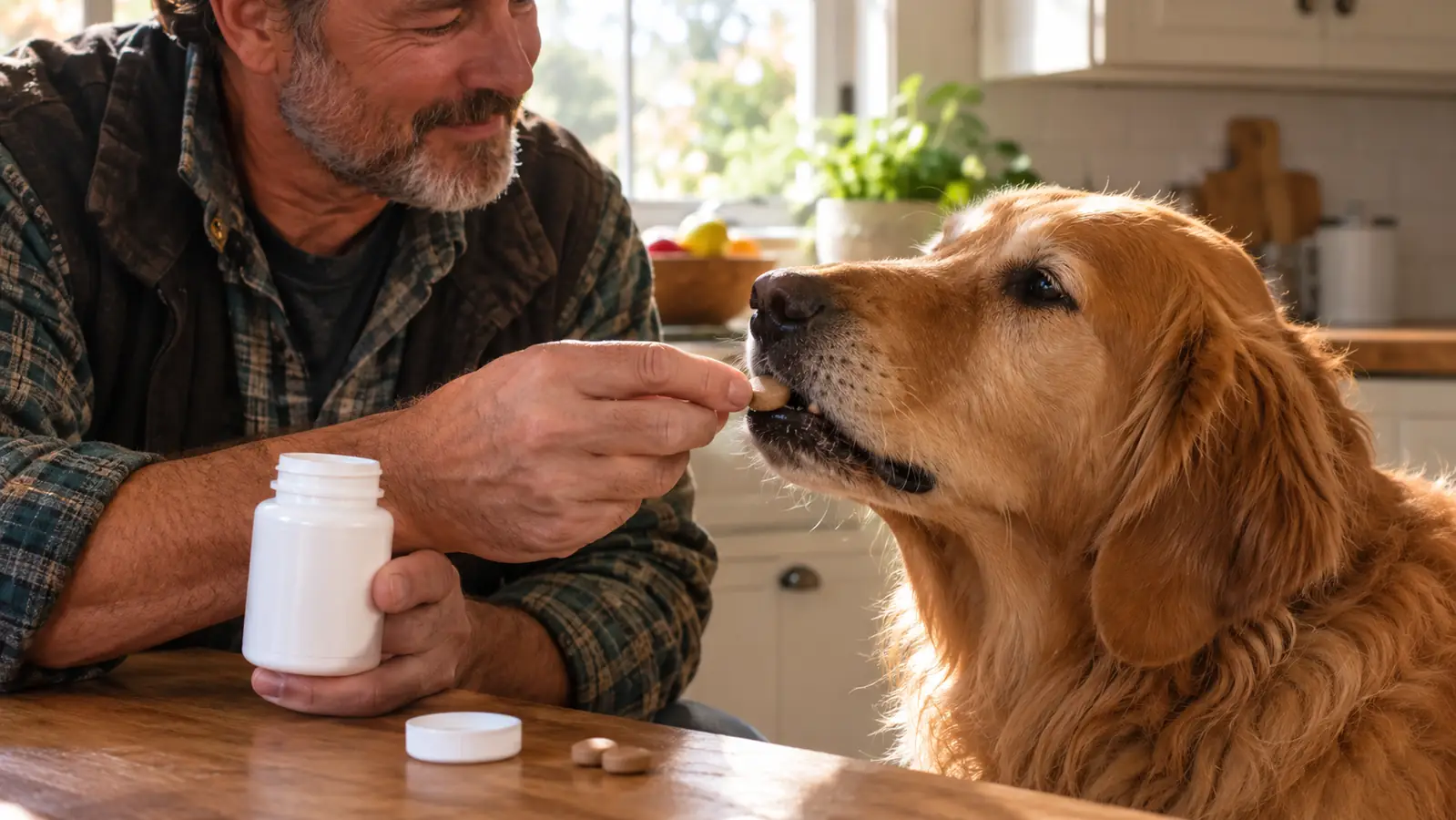
Two years ago, after the X-rays, our vet wrote down a plan for Biscuit: keep his weight where it was, walk him on softer surfaces when we could, make sure his bed was supportive, and add a joint supplement. She named Nutramax Laboratories Cosequin and told me to pick the chewable tablets because some dogs are picky about sprinkled powder. She was right about Biscuit. The tablets have a smell to them, and he takes his every morning like it's a treat. I give him the serving size on the label, which our vet confirmed for his weight, and I do it at breakfast so we don't miss days.
Consistency is the part nobody warns you about. A supplement only works if it's in the dog every day, and there have been weeks when life got in the way. Travel, a busy month, a long day at the fish tank. On the days we missed, I couldn't see a difference in one day. But I could feel the difference when we got back on schedule: the first few mornings after a missed stretch, he was stiffer again. That taught me more than any label did. If you can't commit to daily, this may not be the product for you, and that's a fair thing to know before you buy.
Pepper, our 14-year-old gray shorthair, gets the sprinkle version for cats stirred into her wet food, and she's been on it about eighteen months. Different product, same idea: consistency, patience, and a vet who set the plan. I mention her because the two experiences lined up, and it made me trust the brand more.
The cat version is a capsule you break open and sprinkle over food, which is the right format for a cat who would never chew a tablet. The dog version being chewable is the whole reason it works in our house. Same company, same idea, different wrapper. If your dog turns up his nose at the chewable, that doesn't mean the ingredient idea is wrong for him. It might just mean the format is wrong, and that's worth knowing before you give up on the whole category.
Making It Part of the Day
The routine is simple, and I think the simplicity is why we've stuck with it for two years. Every morning, after breakfast, I put Biscuit's tablet on top of his kibble. He eats the kibble around it first, then the tablet last, like he's saving the best bite. Some mornings I hand it to him directly and he takes it like a treat. There's no pilling, no syringe, no wrestling. That matters more than it sounds like, because the easier a daily thing is, the more likely you are to actually do it.
The other thing that helped was keeping the bottle somewhere visible. I keep ours on the counter next to the coffee maker, so I can't miss it. When we traveled, I packed the bottle in the same bag as my own pills, because if I forgot mine, I forgot his. It sounds silly, but the two-year result is built from a thousand boring mornings, not from one dramatic change.
What Nobody Tells You Before You Start
First: it takes weeks, not days. I read reviews that made it sound like dogs were running marathons by the second week, and that set me up for disappointment. Biscuit showed no change for the first month. None. I was ready to call it a waste of money. Somewhere around week six, I noticed he stopped doing that little brace-and-pause before standing up. He just stood. It wasn't dramatic, and if I hadn't been watching for it, I might have missed it. That's the honest timeline for us: about six weeks before we saw anything, and the change was subtle.
Second: the tablet works with everything else, not instead of it. About six months after we started the supplement, we bought a proper orthopedic bed, and about six months after that a set of stairs so he didn't have to jump. I can't tell you which one did the most, and I don't think it matters. Stiff joints in an older dog get better when you fix the whole picture: rest, warmth, less jumping, reasonable exercise, and the supplement on top. Anyone who tells you the tablet alone fixed their dog is telling you a simpler story than the one I lived.
Third: some dogs simply won't eat these. The chewable tablets have a smell and a texture, and while Biscuit treats his like candy, I've heard plenty of stories from people whose dogs spit them right back out. If you have a picky eater, buy the smaller bottle first, or ask your vet about other forms of the supplement that might be easier to hide. And fourth: you still need the vet. A supplement is not a diagnosis and it's not a prescription. The reason this worked for us is that it was part of a plan our vet set, not a replacement for one.
Fifth, and this is the one I really mean: take before photos or videos. I know it sounds odd, but the changes were so gradual that I almost didn't trust them. I wish I had filmed Biscuit getting up from his bed in the first week, because I don't have a clean record of how stiff he really was. When you watch a dog every day, the improvements creep in quietly. A video from the beginning would have given me proof, and proof is what keeps you consistent through the slow weeks.
What's Actually in the Chewable Tablet
The label lists three active ingredients: glucosamine hydrochloride, sodium chondroitin sulfate, and methylsulfonylmethane, which everyone just calls MSM. Our vet explained it in plain language, and I'll pass that along the same way. Glucosamine and chondroitin are building blocks your dog's body uses to maintain cartilage, the cushioning material in the joints. MSM is a sulfur compound that's often included in joint products because it supports the body's normal inflammatory response. I'm not going to pretend I can see into Biscuit's joints. What I can tell you is that the ingredient list matches what our vet wanted, and that mattered to me.
Nutramax Laboratories has been a leader in pet health for over 25 years, and they're the brand our vet named without hesitation. The label also tells you the specific forms of the ingredients, glucosamine hydrochloride and sodium chondroitin sulfate, and it even prints the compound codes, FCHG49 and TRH122. That's the kind of detail I appreciate. It means the company is telling you exactly what's in the tablet instead of hiding behind a proprietary blend. For a product Biscuit takes every single day, that transparency is worth something.
The label lists the breed size as medium, with uses for average, large, and small dogs, so the sizing is really about the serving, not the dog. We're on our fourth or fifth bottle, and the tablets look the same every time, which is more than I can say for some supplements I've bought for myself.
A note on the tablet itself: it's small, and it has a smell that dogs seem to notice before I even open the bottle. Biscuit comes running when he hears the cap. I can't tell you exactly what it tastes like, and I'm not going to try. What I can tell you is that he chews his without hesitation, and that's been the difference between a supplement we actually give and one that sits in the cupboard.
The Results We Saw, Honestly
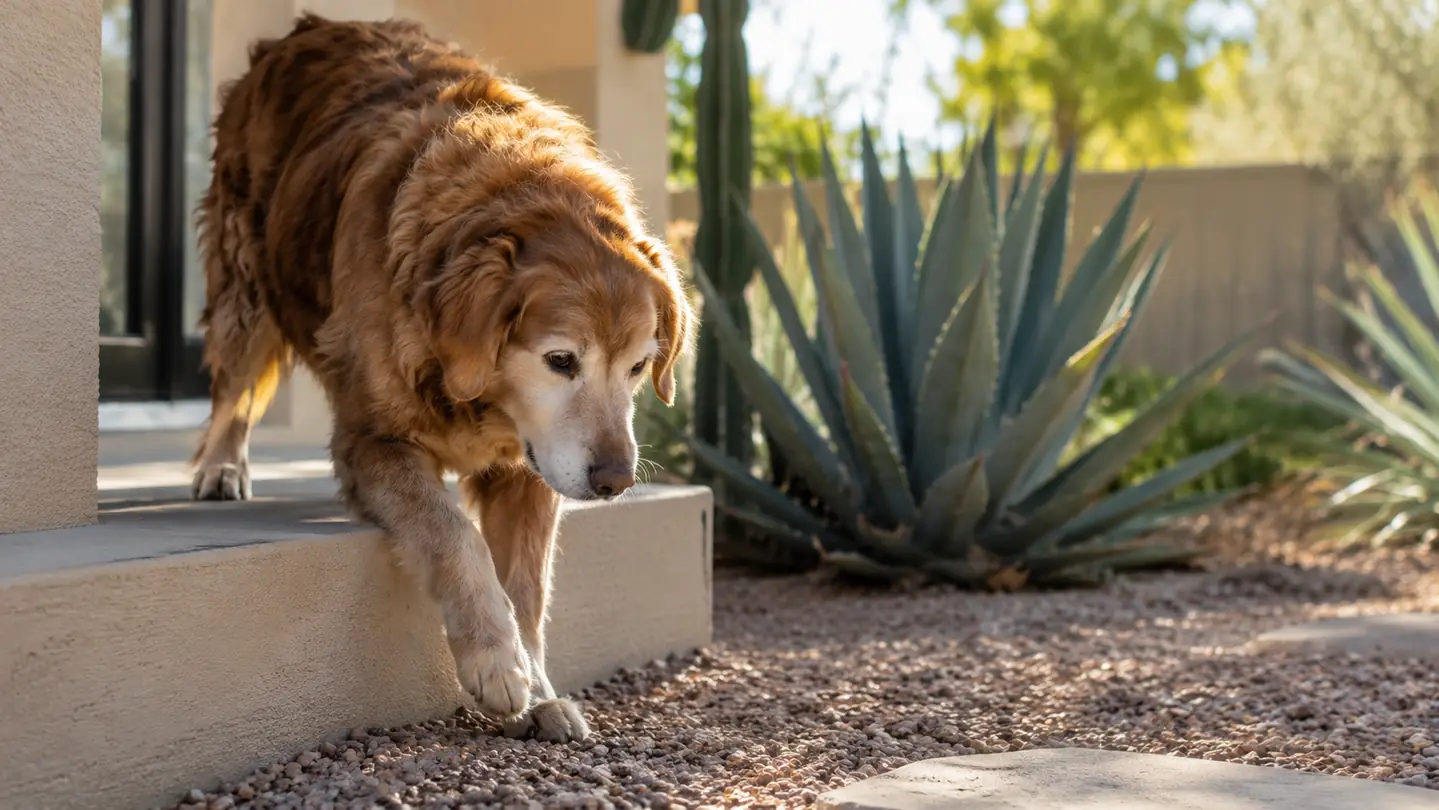
Here's the two-year picture, because a six-week review is not the same as a two-year review. The biggest change happened in the first few months: the morning brace disappeared, and he stopped yelping when he first stood up. After that, things leveled off. He still has stiff days, especially when the weather turns or after a long walk on the pavement. He still uses the stairs next to the bed instead of jumping, and he still won't jump onto the couch. The supplement didn't give him a new set of joints. It made his ordinary days easier, and that's what I needed it to do.
The other honest note is that we measure success in small ways now. He trots to the door when I pick up his leash instead of walking stiffly. He stands up without the pause. He gets himself onto the porch step without help. None of those are dramatic, and I mean that in the most literal way: they're just normal movements that were getting hard for him and got easier. If you're looking for a before-and-after transformation, this isn't that product. If you're looking for your old dog to have more comfortable days, it can be part of that.
I also want to be honest about what we didn't see. Biscuit still has hip dysplasia, and no supplement is going to change the structure of his hips. On his worst days, he's still slow. The difference is that his worst days are less frequent and less painful-looking, and the good days are better. That's the realistic outcome, and I'd rather tell you that than sell you a fairy tale.
One more thing I want to be straight about: we did not see changes in his hips on X-rays. Our vet didn't expect we would, and she said that wasn't the point. The point was how he moved and whether his bad days were less bad. That's how I judge it now, too. I can't give you a number from a scan. I can give you a dog who gets up without the pause, and that's the measurement that matters in our house.
What I Liked
- #1 vet recommended retail joint health supplement brand, and the vet we trust named it first
- Chewable tablets are easy to give; Biscuit takes his like a treat
- Clear label with named ingredients: glucosamine hydrochloride, chondroitin sulfate, and MSM
- Consistent results over two years once we got past the first six weeks
- Made by a company with over 25 years in pet health
Where It Falls Short
- Took about six weeks before we saw any change, not days
- Some dogs won't eat chewable tablets; the smell and texture aren't for every picky eater
- Only works with daily consistency; missed days set you back
- It's a supplement, not a cure; it supports joints but won't fix hip dysplasia
- The cost adds up over a year, and you have to weigh that against the benefit
Six weeks in, Biscuit stopped bracing himself before he stood up. That was the first morning I believed the tablets were doing something.
Who This Is For
This is for the person who has already been to the vet, or is going soon, and wants a supplement that's easy to give every day. It's for dogs whose stiffness is the everyday kind: slow to stand, hesitant on stairs, a little stiff after a long walk. If your vet is on board, the chewable tablets are a low-friction way to add glucosamine, chondroitin, and MSM to the routine, especially for a dog who'll eat anything. It's also for people who want a brand with a long track record and a label that tells you exactly what's inside.
If you're standing in the aisle wondering whether to try a joint supplement at all, start the conversation with your vet, not with the bottle. But if the vet gives the nod, I'd rather you start with a brand that's been making these for over 25 years and a format you can actually stick with. That's the whole argument for this particular tablet in one sentence.
Who Should Skip It
Skip it if your dog won't take chewable tablets, because a supplement you can't give daily is money you don't need to spend. Skip it if you're expecting a cure, because the honest outcome is more comfortable days, not a new dog. And definitely skip it if you haven't talked to your vet yet. Joint stiffness can come from a lot of places, and if the cause is something a supplement can't touch, you want to know that before you spend a year of mornings fighting over a tablet. For us it was the right call, but it was the right call because a vet made the plan.
The bottle we restock without thinking
Two years in, this is the supplement we keep on the shelf. Talk to your vet first, and if they agree it's worth trying, the chewable tablets are easy to give and easy to stay consistent with.
Amazon Check Today's Price on Amazon →