
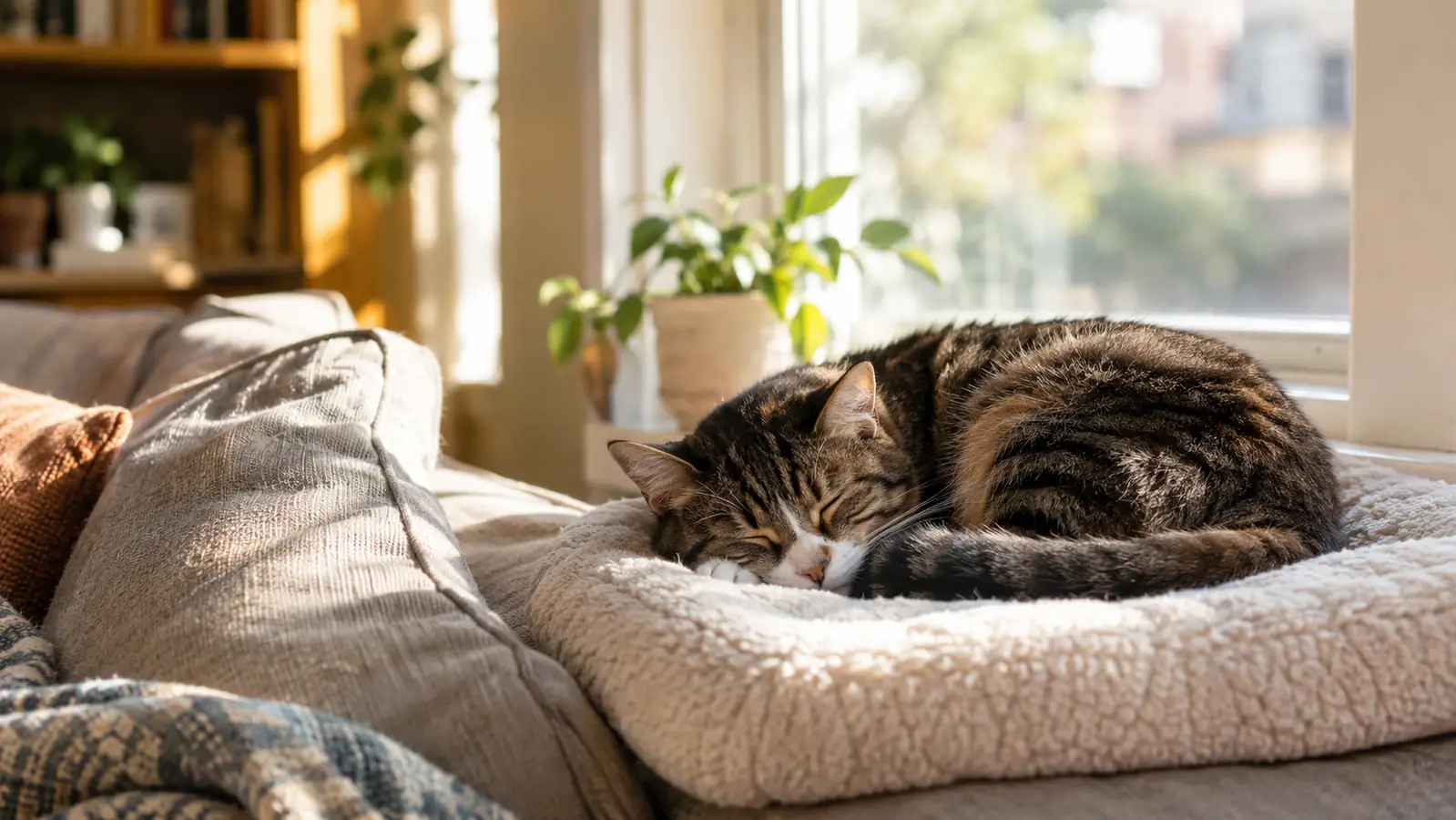
When Pepper stopped jumping onto the bed, I blamed her age and moved on. Fourteen years old, gray around the muzzle, and suddenly the couch was as high as she cared to go. Then our vet said the word arthritis, in her back and her hips, and I started looking at every cold surface in the house differently. The tile floor in Mesa gets genuinely chilly in winter, and Pepper had taken to curling up on the couch end near the living-room window, which is the warmest spot in the room. The first thing I tried was the K&H Pet Products self-warming pad, and a year later I still have opinions about it, both good and honest. I also have opinions about the electric heated beds I almost bought instead, because the question comes up constantly when people find out I've nursed an old cat through stiff joints: self-warming or plug-in? Here's how I'd decide, and I'll tell you right now that the answer surprised me.
If you're asking which one to buy for a stiff old cat, the short answer is that I'd start with the self-warming pad and only move to an electric heated bed if your cat actually needs the extra heat. The self-warming pad is simpler, safer, easier to clean, and it costs nothing to run. The electric kind is warmer, full stop. But warmer isn't always what an arthritic cat needs most. What Pepper needed was a soft, warm-feeling place she could step onto without climbing, that wouldn't slide on the couch, and that I could wash without a fuss. The K&H pad does all of that. The electric bed would have done the warmth part better and the rest of it worse. Let me show you the comparison I wish I'd had a year ago.
| K&H Self-Warming Pad | Electric Heated Bed | |
|---|---|---|
| Warmth source | Reflects your cat's own body heat back at her; nothing to plug in | Electric heating element warms the bed on its own |
| Warmth when your cat moves | Only as warm as the spot she's lying on | Stays warm even when she shifts or gets up |
| Cords and chewing risk | No cord, no outlet, nothing for a kitten to chew | Needs a wall outlet and a cord you have to manage |
| Cleaning | Machine washable, no wiring to keep dry | Cover washes, but the heating element has to stay dry |
| Cost to run | Nothing. It runs on body heat | A small bump on the electric bill all winter |
| Best for | Mild stiffness, afternoon naps, cats that run warm | Deep cold, very old thin cats that need steady heat |
Where the K&H Self-Warming Pad Wins
The biggest win is the absence of electricity. Pepper sleeps a lot, and she sleeps hard. I never have to worry about a cord near her face, a heating element under her that could get too warm, or a kitten someday chewing a wire. The pad captures her own body heat and radiates it back, which sounds like marketing language until you feel it. After Pepper has been on the pad for twenty minutes, the plush surface is noticeably warm to my hand. She does the work, and the pad just reflects it back. For a cat who naps in the same spot for hours, that's plenty of warmth.
The second win is cleaning, and this is where I notice things other people might not. The pad is machine washable, and after a year of afternoon naps, cat hair, and the occasional hairball incident, the stitching has held up completely. I've washed it more times than I can count, and the edges haven't frayed and the filling hasn't bunched. It's also light, 10.24 ounces, so I can move it from the couch to the chair to the floor depending on where Pepper wants to be. At 21 by 17 inches it's plenty for a 10-pound cat, and the 20-pound weight recommendation covers just about any cat I've ever met.
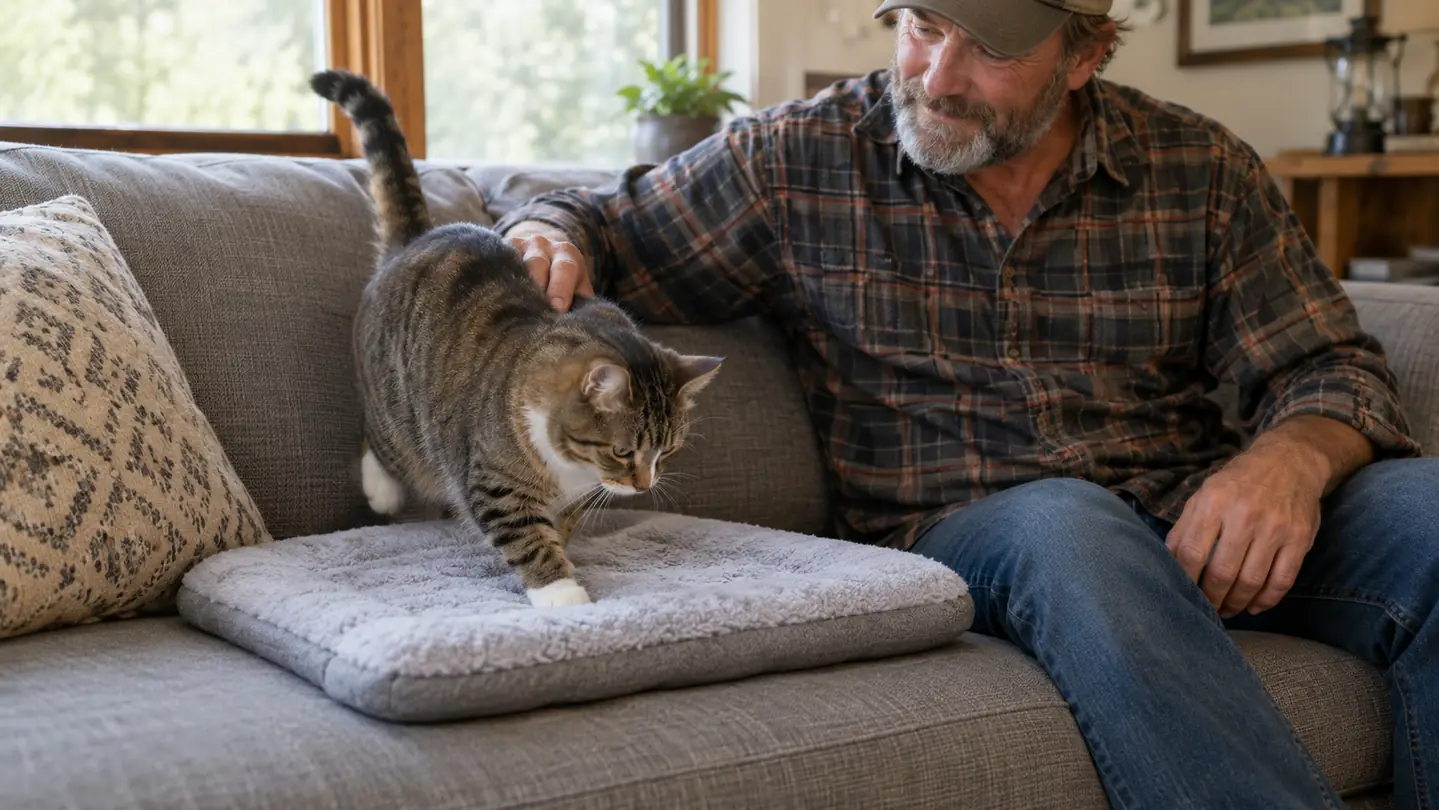
There's also the low-profile thing, which I didn't expect to matter as much as it does. The pad is about an inch thick, flat, with no rim to step over. Pepper's hips don't want an extra hop, and she treats the pad like part of the couch. An electric heated bed with a plush rim looks cozier, but for a cat with stiff back legs, the flat surface is the kinder option.
Where the Electric Heated Bed Wins
I'm not going to pretend the electric kind doesn't have real advantages, because it does. A self-warming pad only works when your cat is lying on it, and it only gets as warm as your cat makes it. An electric heated bed warms on its own, stays warm all night, and keeps producing heat even when your cat shifts around. For a very old, very thin cat that doesn't generate much body heat anymore, that steady warmth can be the difference between a comfortable night and a restless one.
The electric kind also wins if your house runs cold. Mesa winters aren't brutal, but we get nights in the 30s, and there are rooms in this house that never quite warm up. If Pepper slept in a drafty room, I'd probably own a heated bed instead. And if you have a cat that's over 20 pounds, the self-warming pad is simply not rated for her. That's the honest ceiling of the K&H pad, and it's worth knowing before you buy so you don't blame the product for a mismatch that was never its fault.
If your cat has stopped jumping, start with the pad that can't overheat and costs nothing to run.
The K&H Self-Warming Cat Bed Pad is the one I've kept for a year. No cord, no electricity, machine washable, and it uses your cat's own warmth instead of fighting it.
Amazon Check Today's Price on Amazon →How I've Used It for a Year
I want to be clear about what the K&H Pet Products pad is, because the name makes some people imagine a little heated cave. It's a flat pad, about an inch thick, and that's exactly why Pepper likes it. She doesn't climb into enclosed beds anymore. Her hips don't want the extra step of hopping over a rim, and she doesn't like feeling trapped. The pad sits flat on the couch cushion, she steps onto it like it's part of the couch, and she settles in. For an arthritic cat, the low profile is a feature, not a compromise.
Placement mattered more than I expected. I put it on the couch end near the living-room window because that's where Pepper already liked to nap, and the pad simply made the spot better. She uses it most afternoons, and on cold mornings I'll find her there with her paws tucked under her. It stays put on the couch cushion better than I expected, even through a cat's settling-in shuffle. I've had flat pads before that ended up bunched on the floor, and this one doesn't do that.
Washing is simple. I toss it in the machine on gentle and lay it flat to dry, and it comes out looking like new. The one-year warranty is a nice backup, but I haven't needed it. If you sew like I do, you'll appreciate that the seams are straight and the fabric is substantial. I've made my own pet bed covers for years, and I know good stitching when I see it. This pad is well made, and that's the part nobody puts in the product photos.
Pepper naps on this pad almost every afternoon, and she's the same cat who stopped jumping onto the bed eighteen months ago.
The Cold Floor Question Nobody Asks
Here's something I didn't think about until our vet pointed it out: it's not just the warmth, it's the surface. A stiff cat doesn't want to lie on cold tile, and she also doesn't want to lie on something so soft she sinks into it and can't get back up. The K&H pad is thin enough that Pepper stays close to the surface, which makes getting up easier for her. She can push off a firm surface. A deep, squishy bed looks luxurious to us, but for an arthritic cat it can feel like trying to climb out of a hole.
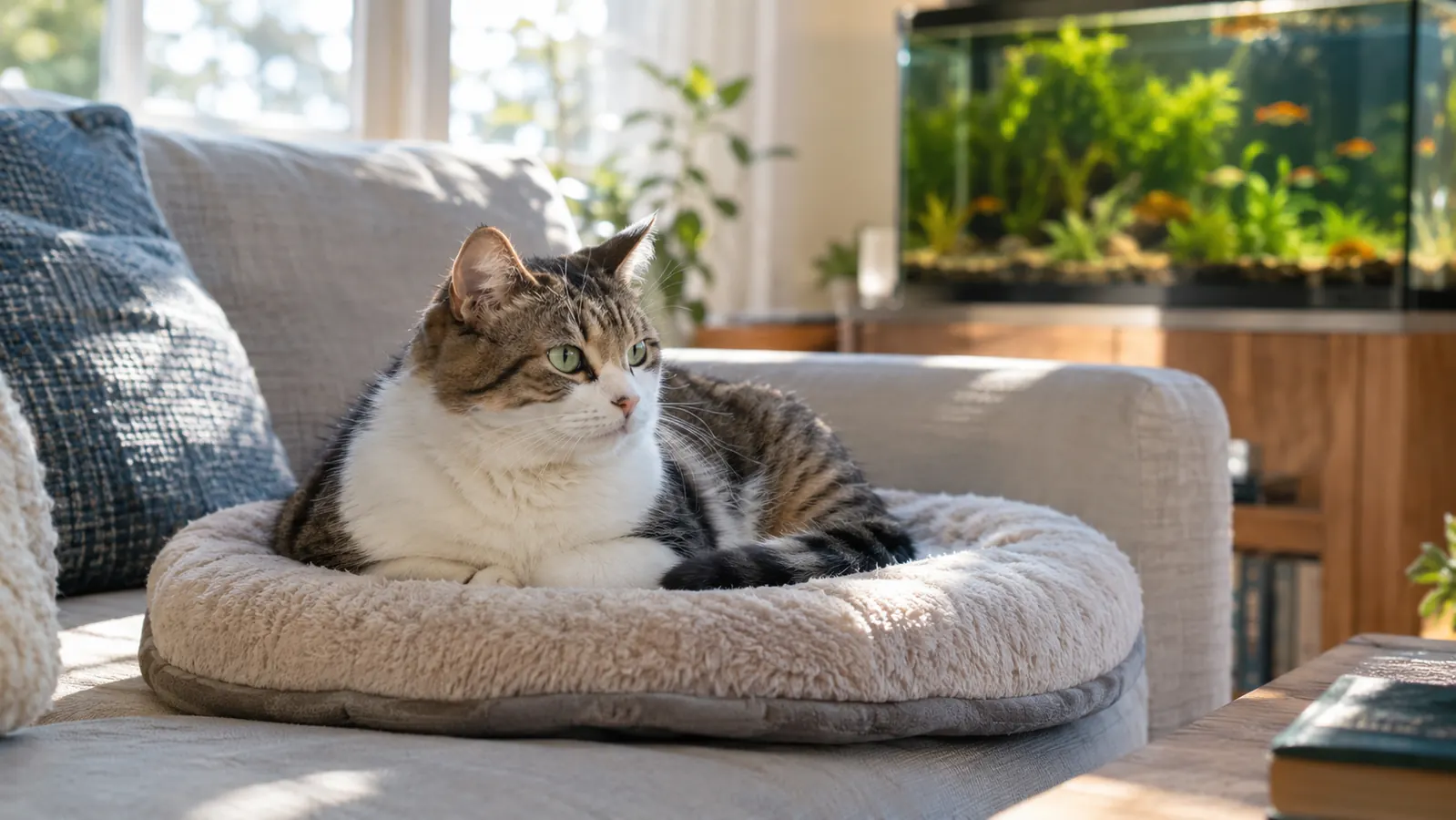
I've also learned that warmth helps most before and after movement, not instead of it. Pepper still has good days and bad days, and the pad doesn't fix her joints. What it does is give her a comfortable place to rest between the things she still wants to do. She still patrols the fish tank in the living room, she still follows me to the kitchen, and then she comes back to her spot on the couch. The pad is her base camp, and that's exactly what she needed.
Who Should Buy Which
Buy the K&H self-warming pad if your cat is under 20 pounds, your house stays reasonably warm, and you want warmth without cords, without a running cost, and without a complicated cleaning routine. It's also the better choice if your cat is nervous about new things, because it looks and feels like an ordinary soft pad. Pepper treated it as furniture from day one. There was no suspicious sniffing, no learning curve, just a cat who found the warm spot and kept it. If your cat already has a favorite chair or couch corner, this pad makes that spot better without asking her to learn anything new.
Buy an electric heated bed if your cat is very old and thin, if your house is genuinely cold at night, or if your cat sleeps in a drafty spot and can't seem to get comfortable. Also buy it if your cat is over the pad's 20-pound limit, because the self-warming pad simply isn't rated for a bigger cat. And if you try the self-warming pad first and your cat ignores it, the electric kind is the logical next step. There's no shame in needing more heat. The goal is a comfortable cat, not a clever product, and your cat will tell you which one she needs.
What I'd Tell a Friend
If my neighbor called me and said her old cat had stopped jumping, here's exactly what I'd tell her. Buy the self-warming pad first. Put it where the cat already sleeps, not where you think a cat should sleep. Don't buy the electric bed until you've given the pad two weeks. And don't expect the pad to fix the arthritis, because it won't. It's comfort, not medicine. Our vet is clear about that, and I try to be clear about it too.
The other thing I'd tell her is to watch where the cat actually sleeps before buying anything. Pepper chose the couch end near the window all by herself, and the pad just made her chosen spot better. If your cat sleeps on the floor, the pad works there too. If your cat sleeps in a cat tree, you can lay the pad flat on a platform. It's flexible because it's flat, and flat is easier for a stiff cat than any fancy structure.
The Bottom Line
For my money, the self-warming pad is the right first choice for most arthritic cats, and the K&H Pet Products version is the one I'd buy again. It's not the warmest option on the market, and I won't pretend it is. But it's the safest, the simplest, the easiest to clean, and the only one that costs nothing to run. If Pepper needed more heat, I'd buy the electric kind without hesitation. Talk to your vet about your cat's specific situation, because arthritis care is never one-size-fits-all. But if you're standing in the aisle trying to decide, start with the pad that uses your cat's own warmth. It worked at my house, and it's still the spot Pepper chooses most afternoons.
The pad I'd buy again for a stiff old cat
K&H Pet Products self-warming pad: no cord, no electricity, machine washable, and it held up to a full year of Pepper's afternoon naps.
Amazon Check Today's Price on Amazon →